|
||||||||
Clustering - Python for Integrated Circuits - - An Online Book - |
||||||||
| Python for Integrated Circuits http://www.globalsino.com/ICs/ | ||||||||
| Chapter/Index: Introduction | A | B | C | D | E | F | G | H | I | J | K | L | M | N | O | P | Q | R | S | T | U | V | W | X | Y | Z | Appendix | ||||||||
================================================================================= Clustering is a form of unsupervised learning (learning with unlabeled data) that involves grouping data points according to features and attributes. Clustering algorithms are unsupervised algorithms which means that there is no labelled data available. The clustering algorithms come from the machine learning literature. As the name implies, the basic idea is to try to identify natural clusters of data points within some large set of data. This method is used to identify different classes or clusters in the given data based on how similar the data is. Data points in the same group are more similar to other data points in that same group than those in other groups. Clustering uncovers patterns and structures within data, leading to valuable insights across various domains. The most common kind of clustering is K-means clustering, which involves representing each cluster by a variable “k” and then defining the centroid of those clusters. Some other applications of clustering in machine learning are:
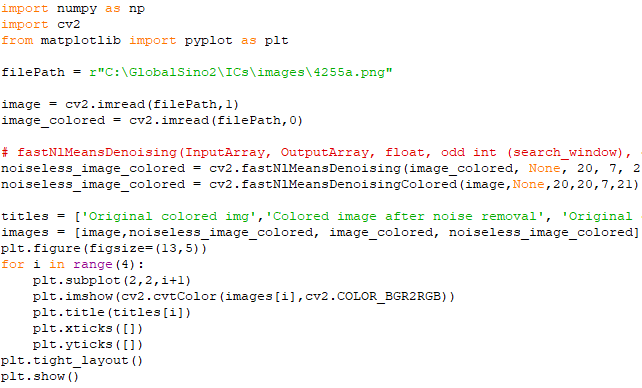
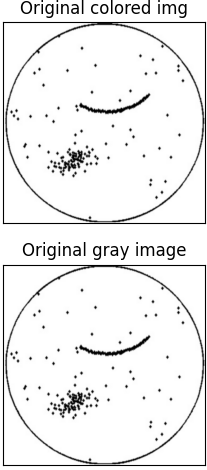
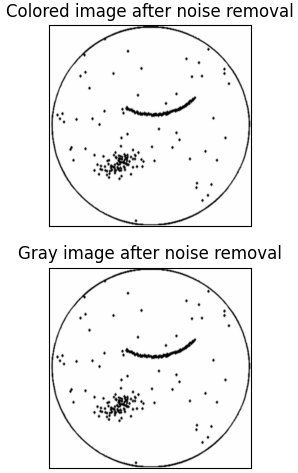
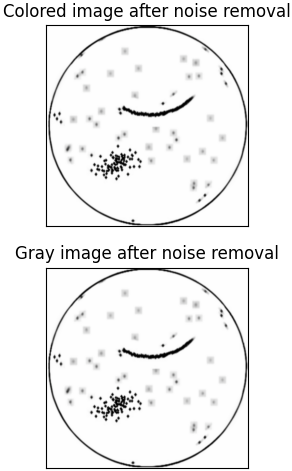
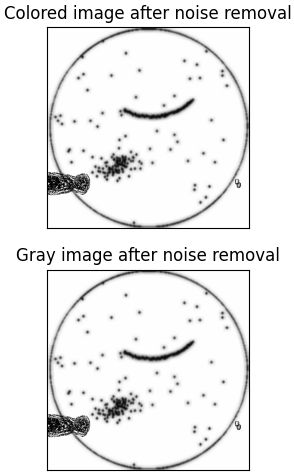
============================================ Denoising with OpenCV. code:
|
||||||||
| ================================================================================= | ||||||||
|
|
||||||||