|
||||||||
Cosine Similarity/Distance - Python Automation and Machine Learning for ICs - - An Online Book - |
||||||||
| Python Automation and Machine Learning for ICs http://www.globalsino.com/ICs/ | ||||||||
| Chapter/Index: Introduction | A | B | C | D | E | F | G | H | I | J | K | L | M | N | O | P | Q | R | S | T | U | V | W | X | Y | Z | Appendix | ||||||||
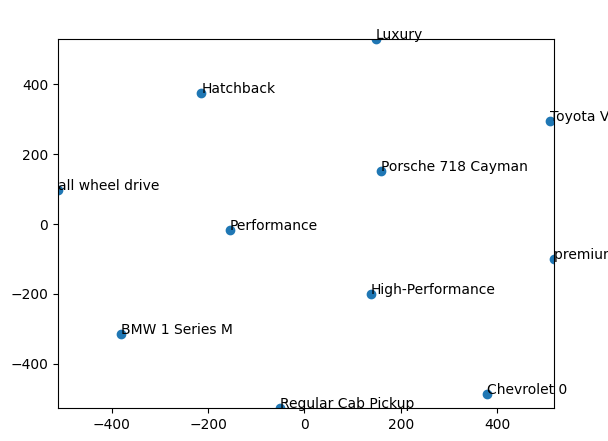
================================================================================= In word embeddings of word2vec model, Euclidian similarity cannot work well for the high-dimensional word vectors because Euclidian similarity will increase the number of dimensions increases even if the word embedding stands for different meanings. Alternatively, cosine similarity can be used to measure the similarity between two vectors. Mathematically, it measures the cosine of the angle between two vectors projected in a multi-dimensional space. Therefore, the cosine similarity captures the angle of the word vectors and not the magnitude. Under cosine similarity, no similarity is expressed as a 90-degree angle while the total similarity of 1 is at 0 degree angle. For small corpora (up to about 1 million entries), computing the cosine-similarity between the query and all entries in the corpus can efficiently be applied. ====================================================== Cosine distance. code: ====================================================== Cosine distance. code: ====================================================== Find the best word similarity with Word2Vec Models/word embeddings: code:
|
||||||||
| ================================================================================= | ||||||||
|
|
||||||||