 |
||||||||||||||||||||||||||||||||||||||||||||||||||||||||||||||||||||||||||||||||||||||||
Infrared (IR) Radiometry and Technologies - Integrated Circuits - - An Online Book - |
||||||||||||||||||||||||||||||||||||||||||||||||||||||||||||||||||||||||||||||||||||||||
| Integrated Circuits http://www.globalsino.com/ICs/ | ||||||||||||||||||||||||||||||||||||||||||||||||||||||||||||||||||||||||||||||||||||||||
| ================================================================================= | ||||||||||||||||||||||||||||||||||||||||||||||||||||||||||||||||||||||||||||||||||||||||
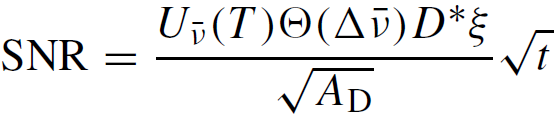
The infrared range covers all electromagnetic radiation longer than the visible, but shorter than millimeter waves. Similar to the fact that the human eye is most sensitive to the yellow–green light and less sensitive to red and blue lights of the spectrum, each IR detector has its own sensitivity range of wavelengths. In general, the IR devices are also designed based on the amount of radiation power that impinges on the detector from the target in order to optimize the overall signal-to-noise ratio (SNR) achieved by the IR systems. The sensitivity and detection limits of an analytical technique are determined by the SNR (signal-to-noise ratio) of the measurement, which can be given by, [2] To improve the sensitivity of IR detection, the design and improving the processes and readout system, and the selection of cameras can be involved. As shown in Table 4786, for thermal imaging, the 8–14 μm band is preferred for high performance due to its higher sensitivity to ambient temperature (~25 C) objects. However, the 3–5 μm band is more appropriate for hotter objects, or if sensitivity is less important than contrast. Although some other detectors, e.g. platinum–silicide (PtSi), have wider wavelength coverage than indium antimonide (InSb) array detectors. However, because the higher directivity (D* > 4×1011 cm Hz0.5W−1) [1] for hot objects with InSb detectors can be reached when the detectors are cooled to liquid nitrogen temperatures or below, the InSb detectors are more favorable in the detection of thermal emission in IC devices. Table 4786. Division of infrared (IR) range and its detection.
[1] Rohit Bhargava, Spectrochemical Analysis using Infrared Multichannel Detectors, (2005).
|
||||||||||||||||||||||||||||||||||||||||||||||||||||||||||||||||||||||||||||||||||||||||
| ================================================================================= | ||||||||||||||||||||||||||||||||||||||||||||||||||||||||||||||||||||||||||||||||||||||||
|
|
||||||||||||||||||||||||||||||||||||||||||||||||||||||||||||||||||||||||||||||||||||||||
 ---------------------- [4786]
  -- The wavenumber,